
Naperville & Channahon Facial Trauma
Oral and maxillofacial surgeons are uniquely trained to treat and repair facial injuries. These specialists are experts in providing emergency care, immediate treatment, and long-term reconstruction and rehabilitation. Their role extends beyond just addressing physical injury; they also help patients recover emotionally, as facial trauma often carries both emotional and physical consequences. Treating these injuries is a delicate process that requires special training, hands-on experience, and an understanding of how treatment will affect a patient’s long-term function and appearance.
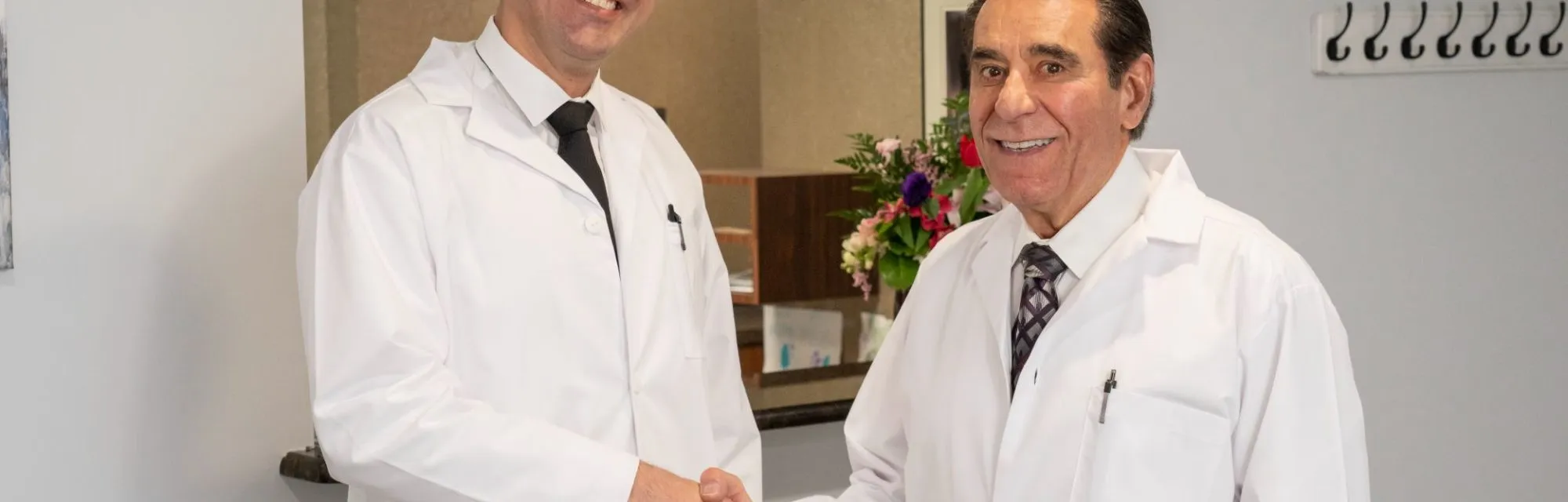
Dr. Almandalawi and Dr. Karakourtis are highly qualified oral and maxillofacial surgeons who meet and exceed modern medical standards. They possess the specialized training and skills required to handle facial trauma and are on staff at local hospitals. They also provide emergency room coverage for facial injuries, which include:
- Facial lacerations
- Intraoral lacerations
- Avulsed (knocked-out) teeth
- Fractured facial bones (cheeks, nose, or eye sockets)
- Fractured jaws (upper and lower jaw)
Causes and Types of Maxillofacial Trauma
Facial trauma can occur due to various incidents such as motor vehicle accidents, falls, sports injuries, work-related accidents, or interpersonal violence. The injuries can range from damage to the teeth to severe harm to the skin and bones of the face. Facial injuries are generally classified into three types:
- Soft tissue injuries (involving skin and gums)
- Bone injuries (fractures of the facial bones)
- Special region injuries (damage to the eyes, facial nerves, or salivary glands)
Soft Tissue Injuries of the Maxillofacial Region
When soft tissue injuries, such as facial lacerations, occur, they are treated with sutures. Apart from ensuring the best possible cosmetic outcome, surgeons also inspect and repair any damage to underlying structures, such as facial nerves, salivary glands, and ducts. Dr. Almandalawi and Dr. Karakourtis have extensive experience in diagnosing and treating all types of facial lacerations, ensuring both functional and aesthetic recovery.
Bone Injuries of the Maxillofacial Region
Facial bone fractures are treated similarly to fractures in other parts of the body. The treatment plan depends on the fracture’s location, severity, and the patient’s general health. While fractures in limbs often require casts for stabilization, the face requires other approaches due to its unique anatomy.
For fractures of the upper and/or lower jaw, the jaws may be wired together to stabilize the bones. Alternatively, small plates and screws can be surgically placed to stabilize the fracture, a technique known as rigid fixation. This method has revolutionized recovery, allowing patients to return to normal function much faster and often avoiding the need for jaw wiring.
The goal of facial fracture treatment is not only to restore function but also to ensure the minimal impact on the patient’s appearance. Whenever possible, incisions are made in locations that are discreet and designed to leave minimal scarring.
Injuries to Teeth and Surrounding Structures
Injuries to the teeth are common and often require the attention of dental specialists. Oral surgeons are particularly skilled at treating fractures in the supporting bone or replanting teeth that have been knocked out. These injuries are often treated by splinting (stabilizing the teeth with wires or bonding).
If a tooth is knocked out, it should be placed in milk or saline, and the patient should seek immediate care from a dentist or oral surgeon. The quicker the tooth is reinserted into its socket, the better the chances of saving it. It is crucial not to wipe the tooth off, as the ligament essential for replantation may be removed.
In cases where the tooth cannot be saved, dental implants may be used as replacements, and additional specialists such as endodontists or restorative dentists may be consulted for root canals or rebuilding fractured teeth.
Why See a Specialist?
The proper treatment of facial injuries requires the expertise of specialists who are trained in emergency care, acute treatment, and long-term rehabilitation. Their knowledge ensures the most effective care possible, helping patients recover both physically and emotionally from traumatic facial injuries.
FAQs
Q: How soon should I seek treatment for facial injuries?
A: Prompt treatment is crucial, especially in cases of tooth avulsion or facial bone fractures. The sooner you see a specialist, the better the chances for preserving the function and appearance of the injured area.
Q: Can facial fractures heal without surgery?
A: Some minor fractures may heal with non-surgical methods, such as rest or splinting. However, more severe fractures typically require surgical intervention for proper stabilization and healing.
Q: What is rigid fixation, and why is it important?
A: Rigid fixation is a surgical method that involves placing small plates and screws to stabilize facial bone fractures. This technique allows for faster recovery, reducing the need for jaw wiring and enabling patients to return to normal function more quickly.
Q: What should I do if I knock out a tooth?
A: If a tooth is knocked out, place it in milk or saline and seek our oral surgery care as soon as possible. Avoid touching the root, as the ligaments needed for replantation are delicate.
Q: Will I have scars after facial trauma surgery?
A: While some scarring is inevitable, oral and maxillofacial surgeons aim to minimize visible scars by placing incisions in discreet locations. In most cases, scars are small and fade over time.
Q: How long does it take to recover from facial trauma surgery?
A: Recovery times vary depending on the type and severity of the injury. Minor soft tissue repairs may heal in a few weeks, while fractures may require several months for full recovery. The use of rigid fixation often accelerates the healing process.