
Bone Grafting for Implants in Naperville & Channahon
Do I have enough bone for dental implants?
After tooth extraction, if the walls of the socket are very thick, they will usually fill naturally with bone in two to three months. However, when the walls of your socket are very thin (such as in your upper and lower front teeth), this type of healing will not be as predictable. In these situations, a bone graft is often placed at the time of tooth extraction to help your body fill in the empty socket with bone. This step will maintain the width and volume of bone you will need for implant placement several months later.
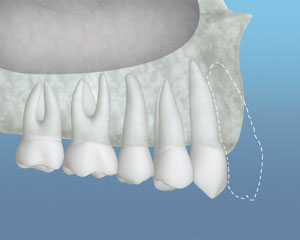
1. Inadequate Bone
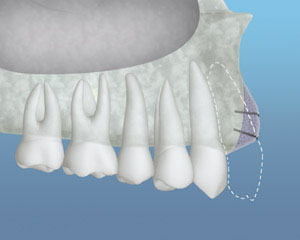
2. Graft Material Placed
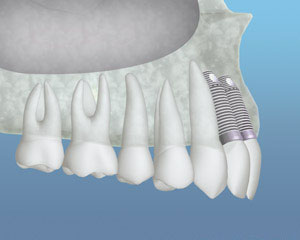
3. Implants Placed
There may be inadequate bone for implant placement if your tooth was removed many years ago and your bony ridge is extremely thin. In this case, a bone graft can be placed next to the thin bone and allowed to heal for up to six months. After the graft has fused to your pre-existing bone, the ridge will be re-entered and the implant placed. Bone grafting is usually a relatively comfortable office procedure. Many different bone-grafting materials are available, including your own bone.
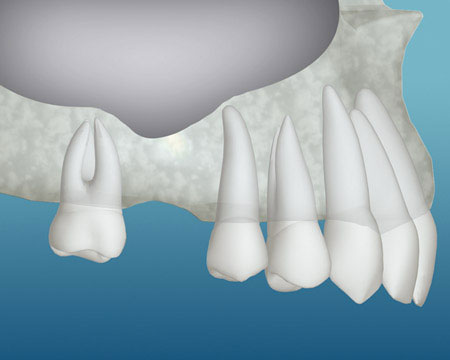
1. Inadequate Bone
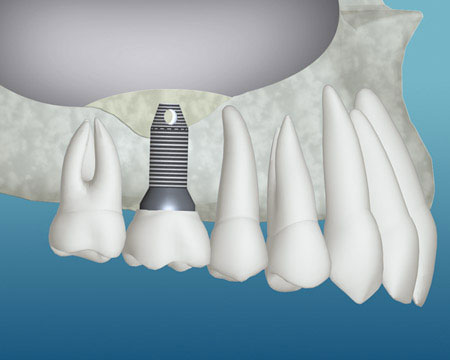
2. Graft Material and Implant Placed
You may also need bone grafting if the sinus cavities in your upper jaw are very large, or very low, and extend into the tooth-bearing areas. This often occurs when teeth in the back of a person’s upper jaw have been removed many years before, and the amount of bone available for implant placement is limited. A “sinus grafting procedure” is then required. Most often, it is performed in the office with local anesthesia and perhaps sedation. During this procedure, the membrane that lines the sinus will be located and elevated. Bone will then be added to restore the bone height and ensure that dental implants of an adequate length can be placed. This procedure often can be performed at the time of implant placement.
Signs You May Need Bone Grafting Before Dental Implants
Not every patient requires bone grafting before receiving dental implants. However, bone loss can occur after tooth loss, gum disease, facial trauma, or long-term denture use. When there is not enough healthy jawbone to support an implant, bone grafting may be recommended to rebuild the area.
You may be a candidate for bone grafting if you:
- Have been missing a tooth for an extended period
- Have experienced bone loss due to periodontal disease
- Need a tooth extraction before implant placement
- Have worn dentures for many years
- Have suffered a facial injury affecting the jawbone
- Have been told there is insufficient bone for dental implants
A comprehensive evaluation and advanced imaging allow our oral surgeons to determine whether bone grafting is necessary and develop a personalized treatment plan.
Benefits of Bone Grafting for Dental Implants
Bone grafting does more than replace lost bone—it helps create a stronger foundation for long-term oral health and successful implant treatment.
Benefits of bone grafting include:
- Improved support and stability for dental implants
- Preservation of facial structure and jawbone volume
- Reduced risk of future bone deterioration
- Better long-term implant success rates
- Enhanced function for chewing and speaking
- Improved aesthetic outcomes
By rebuilding areas of bone loss, patients can often qualify for dental implants that may not have otherwise been possible.
What Happens During the Bone Grafting Procedure?
Bone grafting is typically performed in our office using local anesthesia, IV sedation, or general anesthesia depending on your needs and the complexity of the procedure.
During treatment, grafting material is carefully placed in the area where bone volume needs to be restored. The graft acts as a scaffold that encourages your body’s natural bone-forming cells to regenerate healthy jawbone over time.
Depending on the extent of bone loss, the graft may be performed at the same time as a tooth extraction or as a separate procedure before implant placement.
Bone Grafting Recovery Timeline
Most patients experience only mild discomfort following bone grafting and can return to normal activities within a few days.
First Few Days
Minor swelling, tenderness, and slight bleeding are common. Ice packs and prescribed medications can help manage symptoms.
Week One
Soft foods are recommended while the surgical site begins to heal. Most patients feel significantly better within the first week.
One to Three Months
The graft begins integrating with your natural bone. Although you may not notice changes, important healing is occurring beneath the gums.
Three to Six Months
New bone continues to develop and strengthen. Once adequate bone volume has formed, your oral surgeon can determine whether the site is ready for implant placement.
Healing times vary depending on the size of the graft, overall health, and individual healing response.
Why Choose an Oral Surgeon for Bone Grafting?
Bone grafting is a specialized procedure that requires extensive training in oral and maxillofacial surgery. Our surgeons have advanced experience in diagnosing bone loss, rebuilding jawbone structure, and preparing patients for successful dental implant treatment.
Using advanced imaging technology and personalized treatment planning, we help patients restore lost bone and achieve long-lasting implant results.
Frequently Asked Questions About Bone Grafting
Is bone grafting painful?
Most patients report only mild discomfort during recovery. Sedation and anesthesia options help ensure a comfortable treatment experience.
How long does a bone graft take to heal?
Many bone grafts heal within three to six months, although larger grafts may require additional healing time.
Can implants be placed at the same time as a bone graft?
In some cases, yes. This depends on the amount of existing bone and the location of the treatment area.
What happens if I don’t have enough bone for an implant?
Without sufficient bone support, dental implants may not be stable. Bone grafting can rebuild the jawbone and create a stronger foundation for implant placement.
Is bone grafting successful?
Bone grafting has a high success rate when performed by experienced oral surgeons and when patients follow post-operative instructions.